Two electrodes made from an inert metal (such as platinum, stainless steel or iridium) are connected to a power source and placed in water.
When the current is switched on HYDROGEN will form on the CATHODE electrode (negatively charged electrode – electrons released into the water)
A REDUCTION REACTION takes place at the negatively charged cathode. Electrons (e−) from the cathode are given to hydrogen cations to form hydrogen:
Reduction at cathode: 2H+(aq) + 2e− → H2 (g)
An OXIDATION REACTION takes place at the positively charged ANODE, releasing oxygen gas releasing electrons to the anode to complete the circuit:
Oxidation at anode: 2 H2O(l) → O2 (g) + 4 H+ (aq) + 4e−
Cathode (reduction): 2 H2O (l) + 2e− → H2 (g) + 2 OH – (aq)
Anode (oxidation): 4 OH – (aq) → O2 (g) + 2 H2O (l) + 4 e−
Overall reaction: 2 H2O (l) → 2 H2 (g) + O2 (g)
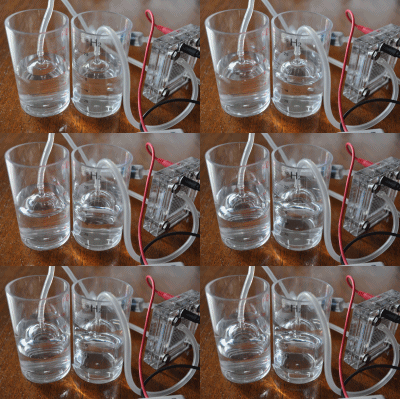
This can be visualized in the following animation.:
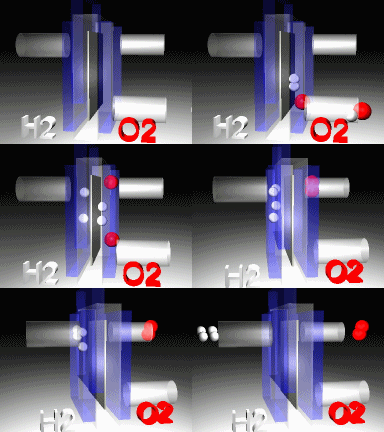
Pure water is a poor conductor of electricity and will require more energy to bring about electrolysis.