 We arrived in the Cathcart district on Wednesday evening after a 4 hour drive up from Port Elizabeth in the pouring rain for most of the journey. Departure for the Cofimvaba district (about 1 hour drive) was bright and early shrouded in mist for most of the 37 km to the tarred road. Shortly after turning off onto the dirt road in the St Marks area the road conditions deteriorated rapidly as we drove past Arthur Mfebe school. Trying to drive in a straight line was nearly impossible and at times we were travelling almost at 90 degrees to the direction in which we were supposed to be going. One is compelled to keep driving for fear of being bogged down in the mud in the hope of gaining traction at some point.
We arrived at the Kwaza Senior Secondary School just after 08:00 with the school gates being locked and virtually nobody in sight. Slowly but surely more and more staff and pupils arrived, well, those that actually were able to reach the school. The Principal Mr Simayne informed us that over 75% of the learners were either cut off by swollen rivers or there was too much mud and rain to make it safely to school. One has to bear in mind that many learners will receive a cooked meal per day as the only sustenance which is compelling enough to make the journey. Attending a high school often means that learners have to walk to the next community some distance away, a luxury that many city dwellers take for granted.
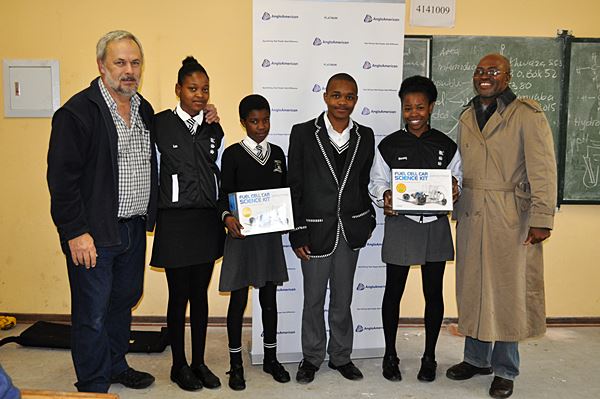
Handing over of the equipment to the Principal Mr Simayne
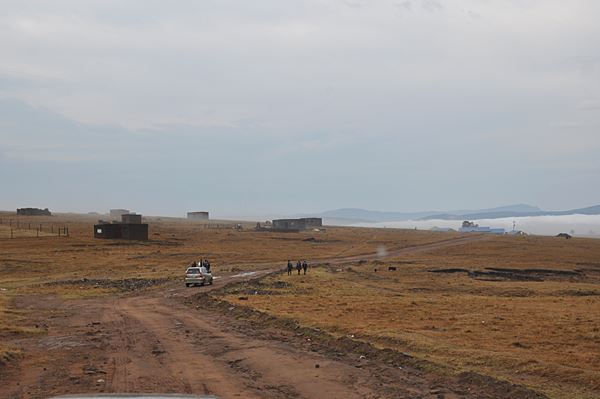
The road to Kwaza

After the official greetings we were told that we could have the whole school for the demonstration – approximately 100 learners of the usual 450. The plan was to provide a shortened version of a previous training session and then to ask a select number of individuals to draft thank you letters to specific companies. These letters would be forwarded to Anglo American Platinum in England for distribution to their partners around the world.
The schedule allowed for 2 hours per school including getting to the next session. Based on previous experience more time had to be allocated to the completion of the letters while the rest of the learners completed a short questionnaire for record purposes.
The road to Zamuxolo was to prove a real challenge based on what was experienced earlier in the day. Travelling at under 10km per hour and with the diff lock on we barely managed to make 500m in thick mud. It was virtually impossible to drive on the side of the road as deep ruts had been formed and we had to contend with where these ruts were directing the wheels to.
Visits to Zamuxolo are always depressing due to the poor state of the buildings. Three mud walled huts are on the premises along with 6-7 poorly resourced classrooms. One mud walled hut is used as a store room as the thatch roof is disintegrating. The second one is used as a Grade R classroom and fortunately has door and windows that closes. The third building has no door or door frame exposing the Grade 7 learners to the elements in summer and winter. Despite this the staff and learners are very positive and one is always welcomed with open arms especially by the Principal Mrs Tyembile.
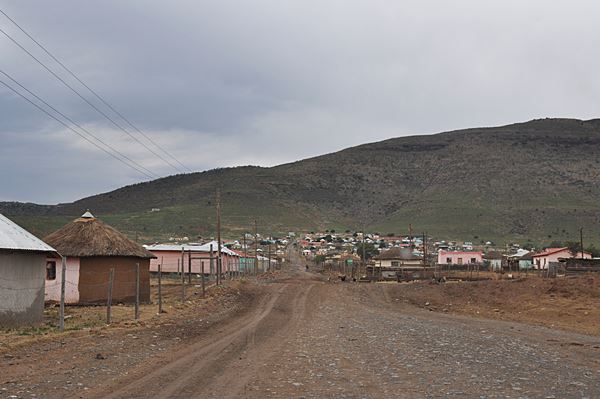
The community close to the school

Presenting the equipment to Mrs Tyembile the Principal of Zamuxolo.
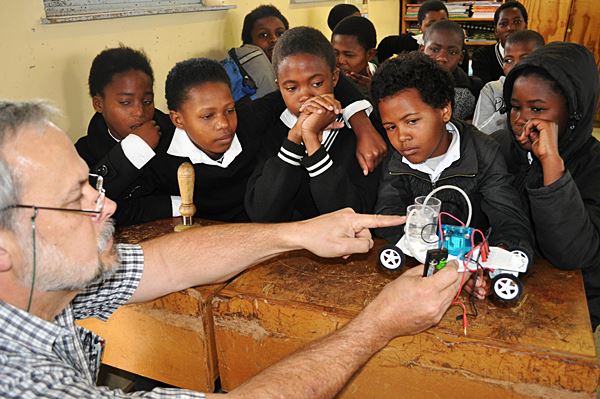

Chalkboard inside the Grade 7 classroom – a mud walled hut with no door.

Three classrooms – two still in use.
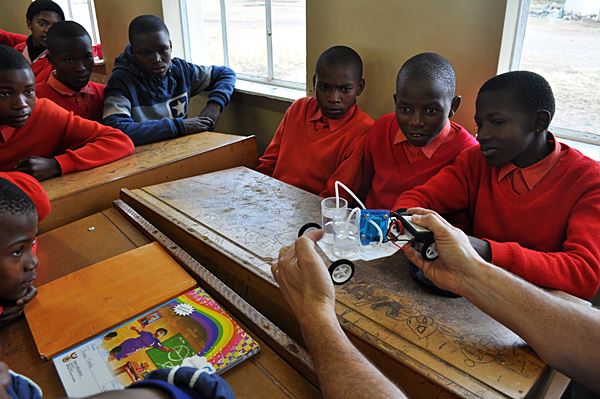
Cadi and Orcilla, the two NMMU students supervised the free play session with Duplo supplied by the Lego Foundation while the clean energy demonstrations were delivered to the Grade 8 and 9 learners. I often have to remind myself of the fact that the learners are only exposed to English from Grade 4 onwards which presents a serious challenge to learning. Despite this I am confident that I was able to connect with the learners through Science and Technology by drawing on key role models from similar communities such as Siya Xuza who won the World Science Expo with his Phoenix Rocket. The equipment for Horizon Fuel Technologies also provides a key platform for engaging their minds.
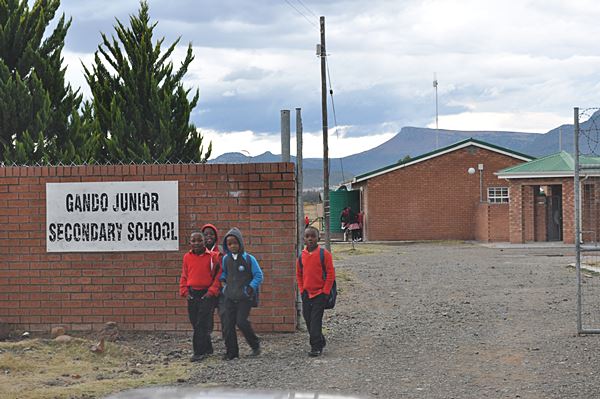
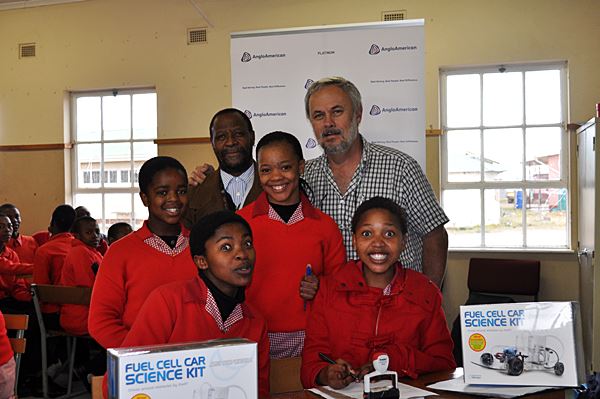
The final destination for the day was Gando Junior Secondary School some 10km away. Fortunately some of the trip involved tarred road allowing for excess mud that had caked onto the wheels and underside of the vehicle to be dislodged. A warm welcome awaited us from the staff very soon after arriving the demonstration had begun to a very lively group of Grade 8 and 9 learners. I will never forget the tears of joy from the Principal, Mr Chulayo, as he accepted the handover of the Hydrogen Fuel Cell equipment to the school.
I am left with a feeling of hope when completing all presentations and focus on trying to increase the returns on investment at every opportunity. My personal belief is that we should expect a greater than 10% return on investment where this project has provided over 4 000 learners with exposure to clean energy technologies thanks to Anglo American Platinum and partners. This would mean that over 400 more learners may be inspired to go into Science, Technology, Engineering, Mathematics and Innovation (STEMI) rather than look forward to a life of unemployment.