Bangilizwe 29 July 2015
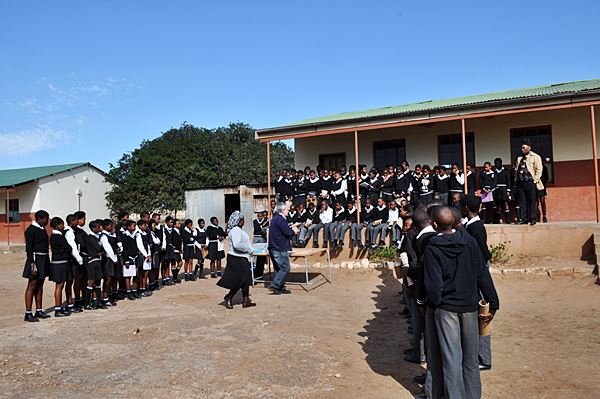
The weather conditions forecast for the Eastern Cape region for Friday 31st July necessitated a change in plans for the trip. We departed at 06:00 on Wednesday morning for a 12:00 meeting at Bangilizwe which we made with 30 minutes to spare. After the customary meeting the principal we arranged for a double session where Esme and Melissa would take the one class of learners for Duplo training while the main training was conducted with the Grades 7 – 9 outside in the sun.
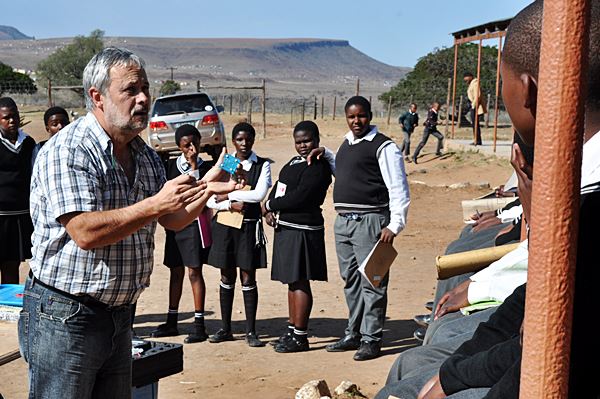
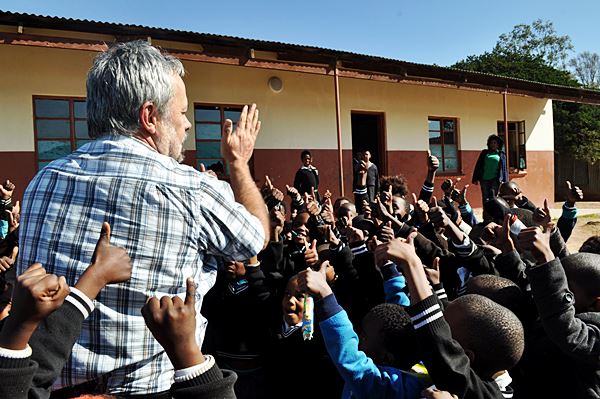
Outdoor classrooms are still the best to demonstrate clean energy where the concept of energy transfer was reinforced throughout the training. During earlier sessions it was noted that learners often reported that the car used water to move. This possible misconception was clarified by repeating several times that energy is used for electrolysis. The Hydrogen and Oxygen then represented stored potential energy where the energy could be extracted as electricity through the Hydrogen Fuel Cell producing electricity and water. It was pointed out that it is the electricity that drives the car and not the water.
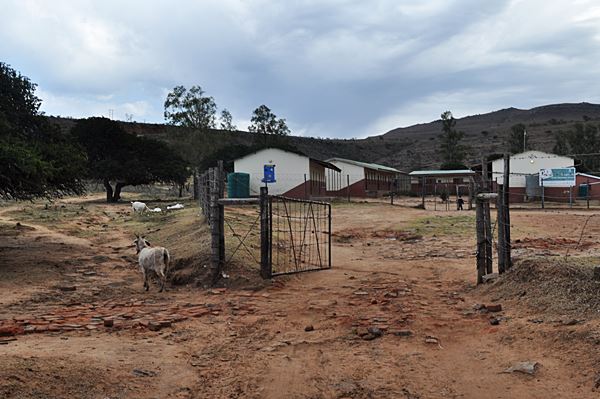
Entrance to the school
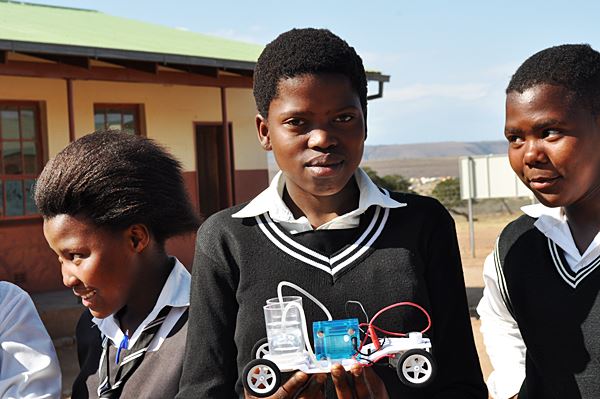
Girls can do science

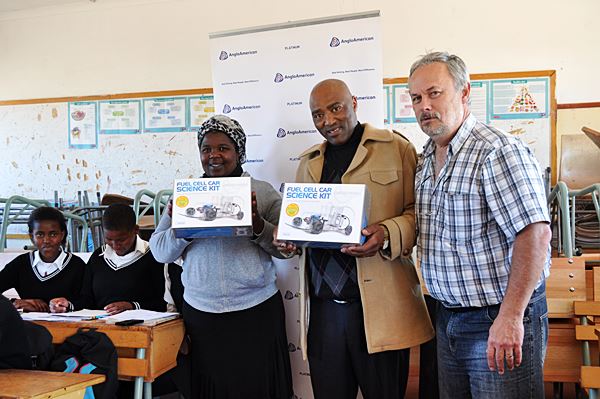
Handing over the equipment to Mr Batala
Esme, Melissa and Mario found the trip to the region very informative. Key points included the distances that the learners have to walk, girls wearing gyms and short socks in temperatures just above freezing, some learners without jerseys, clean clothes despite being torn and well worn, etc.
Another interesting observation with the Duplo was reported by the teacher. Apparently one of the girls lacked in confidence and seldom communicated with her peers. This isolation meant that she was labelled as being not very clever. The introduction of the Duplo allowed her to communicate on an equal footing with her peers surprising everyone and boosting her confidence.
This experience reinforces the importance of layering additional services to the primary function for other initiatives. It all stemmed from a simple question halfway through the second phase of the project where the intention was to provide more university students with the opportunity to experience rural education. Rather than just observing they were thrown into the deep end and delivered several sessions with the Duplo. Since then a model for exposing learners to computer programming has been piloted with the Eastern Cape e-Skills Institute in partnership with NMMU in preparation for a possible national roll-out..
After the training session we returned to the Farm outside Cathcart for a quiet evening of load shedding. This was not a problem as we enjoyed an evening around the fire in the bright moonlight.